4th of July Bunting Embroidery Design
A Seasonal Designer’s First Look: Festive, Flexible, and Fully Marketable
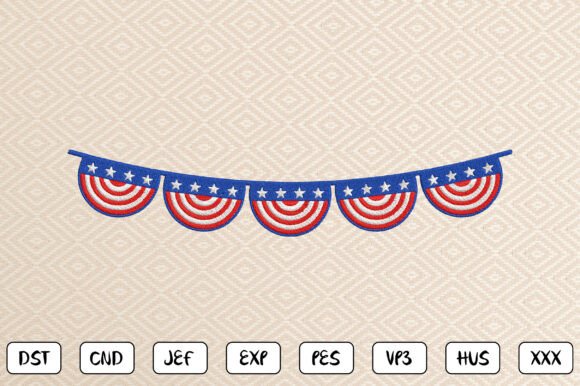
As an embroidery designer who’s built seasonal collections for over a decade—from Memorial Day to Labor Day—I opened the 4th of July Bunting Embroidery Design expecting classic Americana. What I found was more: a balanced, emotionally resonant motif that lands somewhere between nostalgic and fresh. The bold red, white, and blue stripes evoke instant recognition—no decoding needed—while the bunting shape adds gentle movement and rhythm. It reads as festive, not frantic; celebratory, not cliché. There’s no excessive detail or fussy ornamentation—just clean lines, confident spacing, and intentional negative space. That makes it ideal for both small-batch makers and Etsy sellers juggling multiple holiday launches.
Where This Design Shines in Real Holiday Product Launches
The 4th of July Bunting Embroidery Design is unusually versatile across product categories—and that versatility translates directly into sales velocity during peak Independence Day shopping windows (mid-May through early July). On sweatshirt embroidery, it anchors the chest or back with patriotic warmth without overwhelming the garment. As a tote bag design, it becomes a conversation starter at farmers’ markets and parades—especially when paired with coordinating fabric or ribbon accents. For kitchen towel embroidery or pillow cover applications, its structured geometry holds up beautifully against frequent washing and daily use.
It also excels in gift-ready contexts: embroidered on baby onesies or bibs, it reads sweet and sentimental; stitched onto aprons or table linens, it feels communal and celebratory. As an embroidered patch, it’s perfect for limited-edition bundles—think “Patriotic Picnic Kit” with matching napkins, coolers, and reusable straws. Social media previews perform well because the design scales cleanly for Instagram carousels and Pinterest pins. And for printable mockups? Its high-contrast color blocking ensures crisp digital rendering—even at thumbnail size.
Smart Placement & Practical Limits
Like any strong seasonal embroidery file, the 4th of July Bunting Embroidery Design demands thoughtful execution—not just placement. Avoid using it on curved surfaces like baseball caps unless you’ve confirmed the stitch density supports smooth contouring. On thick fabrics—like heavy terry cloth towels or quilted oven mitts—test stabilizer layers first: a medium-weight cutaway works best for structure without bulk. Dark fabric requires careful thread selection: opt for matte cotton or rayon over shiny polyester to prevent glare that washes out contrast.
Don’t force this design into tiny hoop sizes (<5" diameter) if fine stripe definition matters—those delicate alternating bands need breathing room. Likewise, skip metallic thread unless your machine handles it reliably; the design’s clarity depends on consistent stitch coverage, not sparkle. And while it’s charming on stretchy knits (like lightweight tees), always use tear-away + light cutaway stabilizer combo to prevent puckering. Finally, if you’re planning repeated-wash items—baby blankets, dish towels, or kids’ apparel—confirm the machine embroidery design uses secure underlay and satin-stitched edges to resist fraying.
How It Elevates Your Seasonal Strategy
This isn’t just another holiday embroidery file—it’s a strategic asset. Its immediate visual recognition builds trust: shoppers scanning dozens of Etsy listings instantly associate it with authenticity and celebration. That familiarity boosts conversion, especially for last-minute buyers seeking reliable, gift-ready products. When bundled with complementary items (e.g., bunting-embroidered napkins + matching coasters), it strengthens perceived value and encourages larger cart sizes.
Emotionally, it taps into shared cultural warmth—pride, family, backyard joy—without leaning into political symbolism. That neutrality makes it safe for broad audiences: church picnics, corporate team events, school fundraisers, and multigenerational households alike. For small shop owners building brand consistency, it pairs effortlessly with other red-white-blue motifs (stars, fireworks silhouettes, vintage banners) while holding its own as a standalone hero.
Designer Notes You Can’t Skip
- Always test thread colors on both light and dark fabric swatches—red and blue can shift dramatically depending on base tone and thread sheen.
- Check stitch density before scaling: high-density fills may cause stiffness on lightweight apparel or delicate linens.
- Confirm hoop size compatibility—some versions of the 4th of July Bunting Embroidery Design include multiple sizes; choose based on your most common product footprint.
- Use proper stabilizer matched to fabric texture: cutaway for knits, tear-away for stable wovens, and fusible + cutaway for nap-heavy towels.
- Create realistic mockups before listing—use actual garment photos, not generic templates, to show scale and drape.
- Review small details post-stitch: check stripe alignment, edge sharpness, and thread tension on your first run.
- Plan matching color palettes across your collection—coordinate thread shades with ribbons, packaging, and social graphics for cohesive branding.
- Verify commercial licensing before selling finished products—this is non-negotiable for Etsy sellers and craft fair vendors.
Final Thought: A Workhorse With Heart
The 4th of July Bunting Embroidery Design isn’t flashy—but it doesn’t need to be. It’s the kind of digital embroidery file that sells quietly, consistently, and across generations. It supports handmade gift makers who value ease and impact. It empowers small business owners to launch confident, cohesive Independence Day drops without over-engineering. And for customers? It delivers instant joy—the kind that makes someone pause mid-scroll, smile, and click “add to cart.” In seasonal embroidery, that’s not just design. That’s resonance.