Cute Highland Cow Embroidery
A Playful, Professional Touch for Small Business Branding
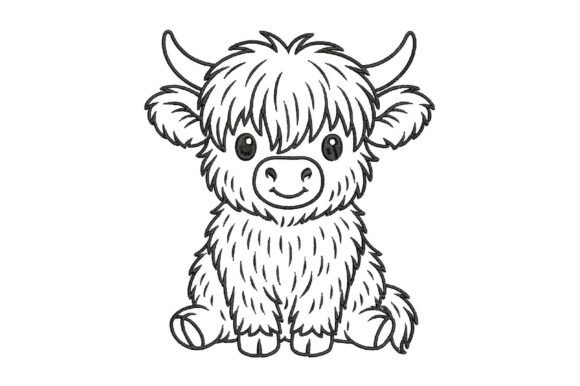
As an embroidery designer who’s developed and tested hundreds of machine embroidery designs for small businesses—from neighborhood cafés to handmade pet brands—I approached Cute Highland Cow Embroidery with both curiosity and critical intent. The title and description—“Add a charming and playful touch… adorable fluffy cow with a sweet expression… cozy and frie[ndly]”—immediately signal warmth, approachability, and rustic charm. That’s no accident. This isn’t just decorative fluff; it’s a strategic visual asset. For businesses in the Baby Animals category—or any brand leaning into handmade authenticity, local pride, or gentle whimsy—Cute Highland Cow Embroidery lands as friendly, professional, and unmistakably memorable.
Real-World Performance Across Merchandise Types
In practice, Cute Highland Cow Embroidery shines where personality meets practicality. On embroidered patches? Excellent. Its balanced proportions, clear silhouette, and expressive face hold up beautifully at 2”–3” sizes—ideal for iron-on or sew-on branding on tote bags, aprons, or staff jackets. As a chest logo accent on custom apparel, it adds instant character without overwhelming the garment. A florist might pair it with a subtle “Locally Grown” text patch; a boutique bakery could stitch it onto linen aprons alongside a monogrammed initial—reinforcing community roots and artisan care.
For cap embroidery, the design works best on structured front panels (not curved bill seams), where its rounded contours align naturally with the cap’s dome. On tote bag design, it anchors the lower corner or center-front with quiet confidence—no need for oversized lettering to compete. As an apron embroidery motif, it conveys craftsmanship and charm simultaneously, especially when stitched in soft ecru or heather grey thread on natural canvas. Even as a product packaging accent—say, on a reusable cotton bag for a pet brand—it elevates perceived value while staying true to a handmade product ethos.
Where to Use It Thoughtfully
Like all strong Embroidery assets, Cute Highland Cow Embroidery demands thoughtful placement. Avoid scaling it below 1.5” for embroidered patches—its fluffy texture and facial details risk blurring or stitching loss on tiny surfaces. Cap fronts are ideal, but curved bill embroidery requires careful digitizing adjustments not guaranteed in every digital embroidery file; always verify the file includes optimized versions for low-profile hoops. Similarly, high stitch density areas (like dense fur rendering) may require extra stabilizer on lightweight or textured fabric—think slubbed linen or brushed cotton—to prevent puckering.
Dark uniforms? No problem—Cute Highland Cow Embroidery reads well in high-contrast thread colors (cream on navy, charcoal on oatmeal), but avoid pale pastels on black unless you’re using rayon or metallic threads with strong sheen. And for items that undergo frequent washing—staff aprons, café towels, kids’ tote bags—confirm the design uses satin-stitch borders and secure underlay. Without that foundation, even the cutest cow can fray at the edges over time.
How It Strengthens Brand Identity and Customer Trust
Small business merch isn’t just about visibility—it’s about resonance. Cute Highland Cow Embroidery supports brand identity by offering consistent, recognizable visual shorthand. When customers see that same cheerful cow on your café’s staff caps, your florist’s delivery totes, or your Etsy shop’s thank-you pouches, they subconsciously register cohesion, care, and intentionality. That builds trust faster than any tagline.
It also signals professionalism without stiffness. Unlike generic clip art or overused icons, this design feels hand-crafted and considered—key for handmade brands wanting to stand out in saturated markets. Visually, it balances modern simplicity (clean lines, open spacing) with classic charm (rounded forms, soft expression), making it versatile across generations and aesthetics. Whether used beside serif typography or minimalist sans-serif, it holds its own. And because it lives firmly in the Baby Animals emotional space—innocence, comfort, nostalgia—it encourages positive buyer engagement, especially for gift-oriented or locally rooted businesses.
Practical Designer Notes Before You Stitch
Before committing to production, here’s what I always do—and recommend you do—with Cute Highland Cow Embroidery:
- Test it in black and white first. Print a grayscale mockup to assess contrast, weight distribution, and legibility—especially around the eyes and muzzle.
- Check small patch viability. Resize digitally to 1.75” and inspect spacing between features. Does the horn detail stay distinct? Does the eye retain shape?
- Review thread color contrast against your base fabric—not just on screen. What looks vibrant on a monitor may mute on chambray or burlap.
- Inspect spacing and underlay. Tight corners or overlapping satin stitches can cause thread breaks or fabric distortion if unstabilized.
- Confirm hoop size compatibility. Most commercial setups handle 4”x4”, but double-check before batching orders.
- Test on real fabric. Run a sample on your exact material—especially if it’s textured, stretchy, or loosely woven.
- Use appropriate stabilizer. Tear-away works for stable cottons; cut-away is safer for knits or delicate linens.
- Create a printable mockup for client approval—this avoids costly rework and builds confidence in your commercial embroidery process.
- Compare it beside other design assets. Does it harmonize with your logo, typography, and secondary icons? Consistency multiplies impact.
- Confirm commercial licensing. Since you’re using it for small business merch, ensure the digital embroidery file grants rights for resale, promotional use, and branded product labeling.
Remember: the strength of Cute Highland Cow Embroidery lies not just in its cuteness—but in how thoughtfully it’s integrated. Used with intention, it becomes more than a motif. It becomes part of your story, your service, and the quiet, confident signature your customers remember.