Mini Cute Garden Embroidery Design File
A Designer’s First Look: Sweet, Small-Scale, and Surprisingly Versatile
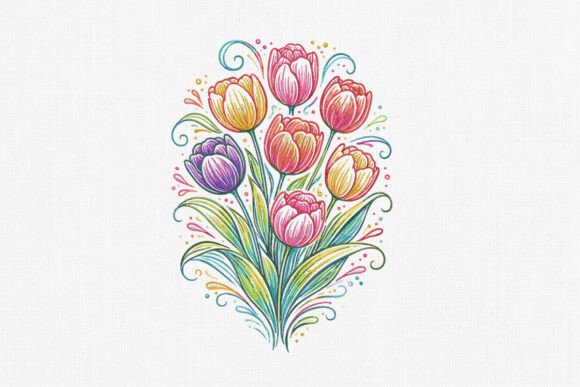
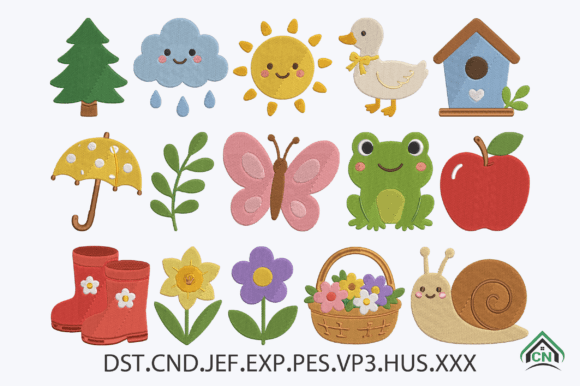
When I opened the Mini Cute Garden Embroidery Design File bundle, my immediate thought wasn’t “cute”—it was “curated.” Fifteen garden-themed motifs, each compact and intentional, with clear visual hierarchy and thoughtful spacing. No overcrowded florals or overwrought stems—just daisies, tiny sprigs, little mushrooms, a single butterfly, a watering can, and soft leaf clusters. The mood is gentle, unhurried, and quietly joyful—not childish, not fussy, but deeply wearable. As a designer who regularly sources embroidery files for client work and small-batch merchandise, I appreciate how this set avoids trend fatigue. It feels timeless enough for nursery decor, yet fresh enough for a boutique tote bag line.
How It Stitches Up in Real Projects
Last week, I stitched three designs from the Mini Cute Garden Embroidery Design File onto a natural linen tea towel, a cotton-blend baby onesie, and a structured canvas tote. Here’s what stood out:
- Tote bag design: A single daisy motif (3.2” wide) centered on the front pocket stitched cleanly—even at that scale, the satin-stitched petals held crisp edges. No thread nesting or puckering, even with medium-weight tear-away stabilizer.
- Baby embroidery: The mushroom design (under 2”) worked beautifully on the onesie’s chest panel. Fine details like the gill lines stayed legible, and the low stitch density kept the fabric soft against skin—critical for infant wear.
- Tea towel application: I used the leaf cluster as a corner accent. Because the fill stitches were open and airy—not dense fill—the design breathed with the fabric texture instead of flattening it.
This isn’t a “stitch-and-forget” file set. But it *is* a reliable one—especially for custom apparel, embroidered patches, and personalized gifts where subtlety matters more than statement size.
Where It Fits—and Where to Pause
The Mini Cute Garden Embroidery Design File shines brightest on flat, stable surfaces: pillow covers, aprons, kitchen towels, and lightweight sweatshirt cuffs. It also translates well into printable mockups for Etsy sellers—clean lines and balanced negative space make it easy to preview on light or dark backgrounds.
That said, use caution in these scenarios:
- Stretchy fabric: While fine on stable knits, avoid high-stretch jersey without cutaway stabilizer—some of the finer running-stitch stems can distort.
- Curved surfaces (like caps): The smallest motifs (<2”) may lose definition on rounded crowns unless digitized with underlay adjustments—check if your machine supports re-hooping or multi-angle stitching.
- Dark fabric + light thread: Test contrast first. A pale yellow flower on navy looks charming in mockups, but some satin-stitch areas can appear slightly translucent if thread coverage is thin.
- Frequent-wash items: Not a flaw—but because many designs rely on delicate outlines and minimal fill, reinforce with a light topping of water-soluble stabilizer if stitching on items meant for daily laundering.
What It Adds to Your Finished Product—Beyond Aesthetics
As an embroidery product reviewer, I judge files not just by stitch count or clarity—but by how they elevate the *perception* of the finished product. The Mini Cute Garden Embroidery Design File consistently adds handmade warmth without sacrificing polish. On a plain cotton sweatshirt, it reads as intentional—not decorative afterthought. For Etsy sellers, that nuance builds customer trust: buyers see care in scale, spacing, and detail restraint. It also supports brand consistency—imagine using the same tiny watering can across a line of kitchen towels, baby blankets, and greeting cards. That kind of cohesion strengthens recognition across channels.
And yes—it boosts giftability. I gifted the stitched onesie to a friend expecting her first child. Her reaction? “It doesn’t look mass-produced. It looks *made for her.*” That’s the quiet power of well-proportioned, nature-inspired design assets.
Practical Notes Every Designer Should Run Before Stitching
Before committing to a full production run—or listing your next craft business item—here’s what I do with every new machine embroidery design, including this one:
- Test on scrap fabric first, using the exact stabilizer and thread colors you plan to use—not just the default palette.
- Review stitch density visually in your embroidery software. Some mini motifs use cleverly spaced fill stitches; others lean on satin and running stitch for breathability.
- Confirm hoop size compatibility. Most designs in this set fall comfortably within 4x4 hoops—but double-check before loading onto smaller-capacity machines.
- Inspect small corners and interior details at 200% zoom. Are there any isolated jump stitches or unsecured thread ends that might snag?
- Try black-and-white mockups. If you’re selling digital embroidery files or designing for print-on-demand, grayscale previews reveal balance issues color sometimes hides.
- Verify licensing terms. Since this is a digital embroidery file, confirm whether commercial use is permitted—especially if you’re creating finished products for resale or offering embroidery services to clients.
Also: don’t skip the fabric texture test. Linen, terry cloth, and brushed cotton all interact differently with satin stitch edges. What reads as “soft” on smooth cotton may read as “fuzzy” on looped fabric—so always sample.
Final Thought: A Quiet Workhorse, Not a Flashy Star
The Mini Cute Garden Embroidery Design File won’t dominate a gallery wall or go viral for its scale—but it will reliably elevate dozens of small shop products, personalized gifts, and everyday handmade items. It’s the kind of embroidery file that makes customers pause, smile, and say, “I want that *exactly* as it is.” That’s rare. And for designers, small business owners, and crafters building real-world value—not just visual noise—it’s exactly what you need.