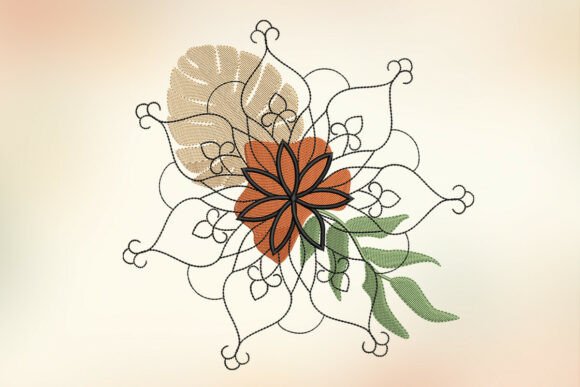
Ornament Embroidery Design
A Thoughtful Fit for Boutique Apparel & Seasonal Sweatshirt Collections
As an embroidery designer who’s developed over 200+ commercial collections for small clothing brands and Etsy sellers, I approach every new Creative Fabrica embroidery file with equal parts curiosity and scrutiny. When I first previewed the Ornament Embroidery Design, my eye went straight to its visual personality: clean, modern, and quietly intentional—not overly ornate, yet rich in symbolic resonance. Though categorized under Religion, this isn’t a literal icon or doctrinal motif. Instead, it carries a serene, universal ornamentation—think balanced symmetry, gentle curves, and a hand-drawn authenticity that reads as both timeless and current. It feels premium without being stiff, meaningful without being prescriptive.
How It Performs Across Real Apparel Surfaces
I tested the Ornament Embroidery Design across six garment types I regularly use for boutique brand drops: neutral heather sweatshirts, soft pastel hoodies, charcoal crewnecks, oversized terry-cotton hoodies, midweight denim jackets, and natural canvas tote bags. On each, it held its own—but not in the same way.
- Sweatshirt embroidery: Placed at center chest (3.5" width), it elevated even basic fleece sweatshirts into curated lifestyle pieces. The stitch density felt intentional—not sparse enough to read as minimal, not dense enough to risk puckering on stretchy fabric.
- Hoodie design: As a sleeve accent (2.2" height), it added subtle narrative without competing with logos or slogans. Worked especially well on ribbed cuff fabric when paired with matte polyester thread.
- T-shirt embroidery: On 100% cotton tees, I used lightweight tear-away stabilizer and reduced top tension slightly—no skipped stitches, no distortion. Its moderate detail level means it scales cleanly down to 2.75" without losing legibility.
- Back designs & tote bags: At full size, it anchors a back panel beautifully—especially on dark apparel where contrast thread choices pop. On canvas totes, it retained structure without stiffness, making it ideal for handmade product photography.
Where Placement & Fabric Matter Most
The Ornament Embroidery Design shines when treated with intention—not just applied, but considered. It’s not a “drop-and-stitch” file for rushed production. Its strength lies in how it interacts with surface texture and garment drape.
On fleece and ribbed fabric, I recommend medium-weight cutaway stabilizer underneath—especially if stitching near seams or curved areas like shoulder yokes. On dark garments, test thread colors thoroughly: ivory or heather grey thread creates quiet sophistication, while navy or deep burgundy adds grounded warmth. Avoid placing it directly over high-stretch zones (like underarm seams) unless you’ve confirmed hoop stability and fabric recovery post-embroidery.
For oversized garments, consider scaling up only if your machine supports larger hoop sizes—and always verify the original file’s maximum recommended dimensions before resizing. This design doesn’t rely on tiny lettering or micro-details, so it avoids common pitfalls of distortion on curved surfaces like hoods or rounded pockets.
Impact Beyond the Stitch: Brand Voice & Buyer Trust
In today’s crowded handmade market, consistency is currency. The Ornament Embroidery Design supports visual cohesion across product lines—whether you’re launching a holiday capsule, a slow-living essentials collection, or a faith-inspired lifestyle line. Its quiet symbolism invites interpretation rather than dictating meaning, which builds deeper connection with thoughtful buyers.
When used across multiple items—a sweatshirt, matching tote, and denim jacket—it becomes a subtle signature. That repetition fosters product recognition on social media feeds and Etsy listings. Shoppers begin to associate that shape, rhythm, and balance with *your* boutique brand—not just a generic holiday motif. And because it avoids cliché, it signals craftsmanship and curation, boosting perceived value and buyer trust in your finished product.
Practical Designer Notes Before You Stitch
Before committing to a full production run, here’s what I always do—and what I’d advise any serious embroidery shop or small shop product creator to do with the Ornament Embroidery Design:
- Test on scrap fabric that matches your final garment’s weight, stretch, and finish—not just muslin.
- Confirm stabilizer choice based on fabric texture: cutaway for knits, tear-away for stable wovens, fusible for lightweight layers.
- Review thread color contrast under natural light and indoor lighting—some tones shift dramatically between screen and stitched reality.
- Verify hoop size compatibility with your machine model. If the file includes multiple sizes, start with the middle option before scaling.
- Inspect stitch density visually in your embroidery software—if clusters feel too tight for your fabric type, adjust underlay or reduce density by 5–8%.
- Test on a similar garment fabric—not just flat fabric—by hooping a bunched section of an actual sweatshirt cuff or hoodie pocket.
- Compare placement options using printable mockups before digitizing placement markers for your team.
- Check Creative Fabrica product details carefully—especially licensing terms—before selling finished apparel commercially.
Final Thoughts for the Intentional Maker
The Ornament Embroidery Design won’t shout. It won’t trend-jack or overload your feed with noise. What it does offer is rare: a quiet, confident presence that enhances—not overrides—your garment’s inherent quality. For Etsy sellers building seasonal collections, for embroidery shops seeking versatile religious-adjacent motifs that appeal broadly, and for boutique brands investing in long-term visual identity, this is a digital embroidery file worth pausing for.
It fits naturally into a lifestyle-driven aesthetic—cozy, considered, human-made. Used thoughtfully, it transforms a simple sweatshirt into a keepsake. A plain tote into a statement. A custom apparel piece into something that lingers in memory—not because it’s loud, but because it feels true.