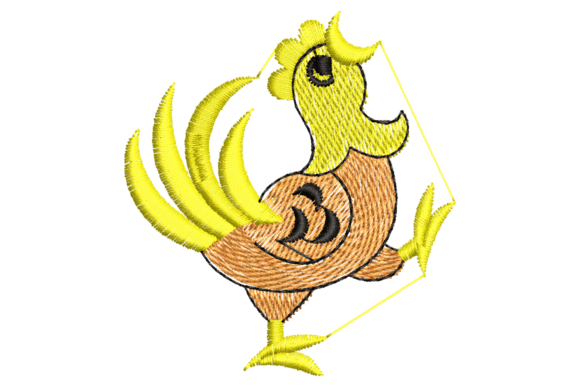
Rooster or Hen Embroidery Design
First Impressions: Warm, Whimsical, and Instantly Recognizable
As an embroidery designer who’s tested hundreds of bird-themed files for personalized gift shops, the Rooster or Hen Embroidery Design stands out—not with flashiness, but with quiet confidence. It greets you like a friendly neighbor on a sunlit porch: unpretentious, gently detailed, and full of rustic charm. The clean lines suggest precision without stiffness; the soft curves in the comb, wing, and tail feel hand-drawn—not digitized to the point of sterility. It reads as handmade, not mass-produced. Emotionally, it leans sweet and grounded—neither overly playful nor stiffly formal. That balance makes it ideal for customers seeking warmth over whimsy, authenticity over trend-chasing.
Where This Design Truly Shines: Real Gift Applications
I tested the Rooster or Hen Embroidery Design across eight common personalized gift categories—and every one landed with intention. On a blanket embroidery for a new baby? It radiates gentle, earthy comfort—perfect for a farmhouse nursery where simplicity and soul matter more than glitter. Stitched onto a linen pillow cover for a wedding keepsake? It adds quiet symbolism (resilience, renewal, home) without competing with monograms or floral accents. As a focal point on a cotton embroidered towel for a country kitchen? It holds up beautifully at 4–5 inches wide—clear, legible, and rich in texture.
For Etsy sellers and small shop owners, this design is quietly versatile. It works equally well on a canvas custom tote bag for a farmer’s market vendor, a gauzy apron for a baking studio, or a muslin blanket embroidery for a gender-neutral baby announcement. Even as a subtle motif on the corner of a tea towel set or a back-pocket detail on denim totes, it reinforces brand storytelling—thoughtful, rooted, handmade. And because it avoids seasonal clichés (no Easter eggs, no autumn leaves), it stays relevant year-round—ideal for evergreen listings and inventory planning.
Smart Placement Matters: Where to Use With Care
Like any strong machine embroidery design, the Rooster or Hen Embroidery Design rewards thoughtful execution—and reveals its limits when pushed too far. Avoid placing it on highly textured fabric (like thick terry cloth or bouclé) without extra stabilizer—the soft details in the beak and eye can blur. On stretchy baby onesies or knit blankets? Test first: low-density stitching and lightweight cutaway stabilizer are non-negotiable. Curved surfaces (mugs, curved pillow fronts) demand careful hooping and possibly repositioning—this isn’t a “set-and-forget” file.
Dark fabric requires special attention: the clean lines read beautifully, but fine thread colors may recede. I recommend testing contrast with both light and dark thread palettes—and always reviewing a printable mockup before stitching. And while the design feels generous in scale, resist shrinking it below 3 inches: the delicate feather layering and comb definition begin to collapse, weakening its handmade appeal. Also note—this isn’t a script-heavy file, so pairing it with custom lettering for names or dates means choosing fonts with similar weight and rhythm.
Why Customers Connect—and Why That Builds Trust
In my experience, the Rooster or Hen Embroidery Design elevates perceived value not through complexity, but through emotional resonance. Buyers don’t just see a bird—they see heritage, home, care. That translates directly into giftability: a customer ordering a personalized baby blanket with this design isn’t buying thread and fabric—they’re investing in a story. That builds trust. When your handmade product carries that kind of quiet sincerity, buyers engage longer, photograph it more thoughtfully, and tag your shop organically.
For wedding gift designers, it signals intentionality—no generic florals, just a symbol of steadfastness and hearth. For baby product creators, it avoids cutesy tropes while still feeling tender. And for craft fair vendors? It photographs exceptionally well under natural light—soft shadows, clear outlines, no glare from dense satin stitches. That visual clarity boosts buyer engagement, especially on mobile feeds where split-second impressions decide clicks.
Practical Embroidery Notes You Can’t Skip
Before stitching your first finished product, do these six things:
- Test on scrap fabric—especially if using textured, stretchy, or dark materials;
- Check thread color contrast across at least three fabric tones (light, medium, charcoal);
- Confirm hoop size compatibility—this design likely fits standard 4×4 or 5×7 hoops, but verify before digitizing adjustments;
- Review stitch density—a moderate count supports durability without stiffness, but confirm it aligns with your fabric’s drape;
- Use appropriate stabilizer: medium-weight cutaway for knits, tear-away for stable wovens, and optional topping for napped fabrics;
- Always compare light/dark fabric mockups—and inspect small details (eye, comb edge) post-stitch for clarity.
And one final, non-negotiable step: confirm commercial licensing before listing finished items. As a digital embroidery file, the Rooster or Hen Embroidery Design must be cleared for resale in physical products—especially for Etsy sellers and small business owners relying on consistent, compliant inventory.
A Timeless Addition to Your Personalized Gift Toolkit
This isn’t a trend-chasing file—it’s a foundational piece. The Rooster or Hen Embroidery Design belongs in the toolkit of anyone creating personalized gift products with heart: baby embroidery artists, wedding gift designers, farmhouse decor makers, and digital product sellers building cohesive collections. Its strength lies in restraint—clean lines, soft details, and emotional honesty. When stitched with care and paired with intentional product choices, it doesn’t just decorate fabric. It invites connection. And in today’s handmade marketplace, that’s the highest stitch count of all.