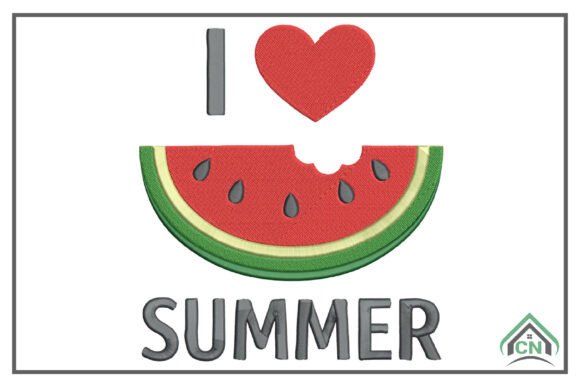
Summer Watermelon Embroidery File
A Craft Fair Designer’s First Look: Bold, Bright, and Instantly Recognizable
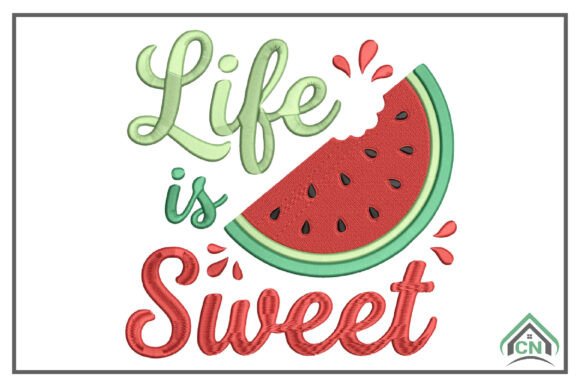
As someone who’s stitched hundreds of designs for weekend craft fairs and handmade markets, my first impression of the Summer Watermelon Embroidery File is immediate and positive: it reads as bold, cheerful, and unapologetically summery. There’s no ambiguity—it’s fresh, playful, and saturated with seasonal energy. It doesn’t try to be minimalist or rustic; instead, it leans into joyful fruitfulness. That’s a huge advantage when your booth has 30 seconds to capture attention amid hand-poured candles, ceramic mugs, and woven wall hangings. Customers don’t need to pause and decode it—they see watermelon, they feel sunshine, they smile.
Where This Design Shines on Real Craft Fair Products
The Summer Watermelon Embroidery File performs exceptionally well across high-visibility, high-margin craft fair staples:
- Tote bag design: Centered on a natural canvas or striped cotton tote, it becomes an instant conversation starter—ideal for eco-conscious shoppers and farmers’ market goers.
- Apron embroidery: Placed just above the pocket or centered on the chest panel, it adds personality without overwhelming function. Works especially well on denim, linen, or medium-weight cotton.
- Tea towel embroidery: A single watermelon motif in the lower corner or centered mid-panel gives kitchen linens a boutique-ready finish—soft enough for farmhouse charm, bright enough for modern gifting.
- Embroidered patch: When digitized cleanly, this design scales beautifully into a sew-on or iron-on patch—perfect for denim jackets, backpacks, or kids’ accessories.
- Fabric pouches & pillow covers: Its balanced shape and clear silhouette hold up even on curved surfaces and textured weaves, making it reliable for small-batch production.
It’s less ideal for ultra-fine details like tiny lettering on caps or dense monograms—this isn’t a “subtle branding” file. It’s a statement piece. And that’s exactly what sells at craft fairs.
What Makes It Sell—Beyond Just Cuteness
From a designer’s booth perspective, the Summer Watermelon Embroidery File delivers real commercial advantages:
- Visual clarity at a glance: No squinting required. Even from six feet away, the contrast between green rind, pink flesh, and black seeds reads clearly—critical for crowded fair aisles.
- Strong online-to-in-person continuity: It photographs beautifully for Etsy listings and Instagram posts. The colors translate well across devices, and its clean outlines make printable mockups look professional without heavy editing.
- Batch-friendly rhythm: Its consistent shape and moderate stitch density support repeatable, efficient hooping—no constant repositioning or stabilizer recalibration needed across dozens of tea towels or totes.
- Booth display strength: Group three items—a watermelon-embroidered apron, a matching tea towel, and a fabric pouch—and you’ve built a cohesive, shoppable summer capsule. That tells a story customers want to take home.
Careful-Use Notes Every Embroiderer Should Know
This isn’t a “set-and-forget” design. To preserve quality and avoid customer returns, pay close attention to these practical constraints:
- Dense stitch areas: The seed cluster and rind texture may require reduced stitch density or split satin fills on heavier fabrics—test before committing to 50+ units.
- Small details on textured surfaces: Avoid placing the full design on highly napped terrycloth towels or thick canvas caps—the fine lines may blur. Opt for simplified versions or larger-scale renditions instead.
- Dark fabric contrast: On navy, charcoal, or deep olive, ensure thread colors are vibrant enough (e.g., neon pink vs. dusty rose) to maintain visual pop.
- Curved cap surfaces: If adapting for headwear, confirm the design fits comfortably within standard front-embroidery zones—don’t stretch or distort the watermelon shape.
- Clarity at smaller sizes: Below 3.5 inches wide, seed detail and subtle shading may collapse. Stick to 4–6 inches for optimal impact on most craft fair products.
Design Integrity Meets Handmade Value
When executed well, the Summer Watermelon Embroidery File elevates perceived value instantly. Customers associate crisp, confident embroidery with skilled craftsmanship—not mass production. That perception directly supports higher price points for your handmade product. It also reinforces brand consistency if you’re building a seasonal collection (think: strawberry in spring, sunflower in late summer). In a sea of printed transfers or heat-pressed vinyl, this machine embroidery design signals authenticity, care, and tactile appeal.
Essential Designer Checks Before Production
Before cutting fabric or loading hoops, run through these non-negotiable steps:
- Test the Summer Watermelon Embroidery File on scrap fabric matching your final product—especially for texture and weight.
- Check thread contrast against your base fabric under both daylight and indoor lighting.
- Review spacing between elements—ensure no parts float too close to the edge or crowd adjacent seams.
- Confirm hoop size compatibility with your embroidery machine and intended product (e.g., cap frames vs. flat hoops).
- Inspect stitch density visually—look for puckering risk or over-stitching in curved sections.
- Choose stabilizer wisely: cutaway for knits and stretchy totes, tear-away for stable linens and tea towels.
- Create at least one real mockup—not just a digital preview—to assess drape, color harmony, and tactile presence.
- Compare how the design looks on light vs. dark fabric swatches side-by-side.
- Verify commercial licensing terms—this is essential for Etsy sellers, small shop products, and any business selling finished goods.
Remember: a great digital embroidery file only becomes a great craft fair product after thoughtful, hands-on validation. The Summer Watermelon Embroidery File has strong bones—but your judgment, testing, and attention to material nuance turn it into something people reach for, not scroll past.