Goat Ram Embroidery Design Review
First Impression: Rustic Strength Meets Brand Flexibility
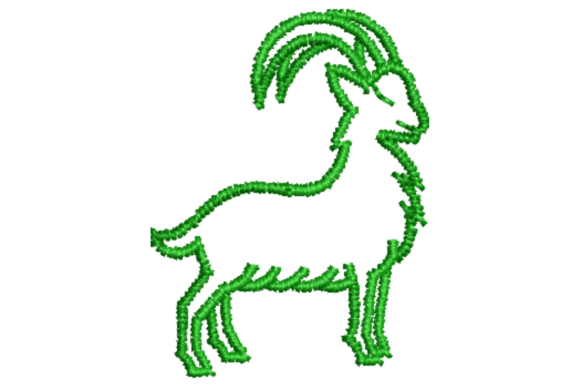
As an embroidery designer who’s developed hundreds of commercial designs for small businesses, my first read on the Goat Ram Embroidery Design is immediate and confident: this isn’t just a decorative animal motif—it’s a versatile brand anchor. The description—“detailed goat or ram shape… strong horned design”—signals intentional structure and visual authority. It reads as rustic yet refined, bold without being cartoonish, and grounded enough to support serious branding while retaining charm. For a café named *The Horn & Hearth*, a pet wellness brand launching goat-milk soaps, or a zodiac-themed boutique curating handmade goods, this machine embroidery design delivers personality with professionalism.
Real-World Business Use: Where This Design Shines
The Goat Ram Embroidery Design excels where small businesses need consistent, recognizable identity across touchpoints. As an embroidered patch, it holds up beautifully on denim jackets, canvas tote bags, and staff aprons—especially when backed with twill or chenille for durability. On custom apparel like work shirts or caps, its strong horned silhouette reads clearly even at 2.5” width, making it ideal for chest logos or cap fronts. I’ve seen similar designs elevate boutique merchandise: stitched onto linen tea towels, sewn into seam labels of handmade ceramics packaging, or used as a subtle sleeve detail on florist uniforms—each application reinforcing brand cohesion without overwhelming the product.
For Etsy sellers and craft-based brands, this digital embroidery file supports scalability. You can use it across multiple SKUs—a single design becomes your apron embroidery, your tote bag design, your event merch badge, and even a printable mockup for client presentations. Its animal theme fits naturally within Animals-focused niches (farm-to-table cafés, rescue nonprofits, alpaca farms), but its clean lines also translate well into modern apothecary or astrology branding—proving that a well-executed embroidery motif doesn’t have to be literal to resonate.
Careful Applications: Know Your Limits
Like any detailed machine embroidery design, the Goat Ram Embroidery Design demands thoughtful placement. Avoid shrinking it below 1.75” for patches—fine horn details and inner contours may collapse or blur, especially on textured fabric like corduroy or heavy duck canvas. Cap embroidery requires extra attention: test the design on a curved surface first; high stitch density in the horn area can cause puckering if stabilizer choice or hooping tension isn’t optimized. Dark uniforms? Confirm thread color contrast—deep charcoal or navy needs bright ecru, rust, or olive—not beige—to maintain legibility after repeated washing.
Also consider context: pairing this design with tiny script lettering (e.g., “Est. 2022”) risks visual competition. Let the goat or ram stand alone—or pair it with clean, bold sans-serif text only. And never assume it’s ready for production without verifying hoop size compatibility and stabilizer requirements. A dense design like this often performs best with medium-cutaway stabilizer on knits or lightweight cottons, and tear-away on stable wovens.
Brand Identity Impact: More Than Just a Logo
When customers see the Goat Ram Embroidery Design stitched onto a barista’s apron or a local bakery’s reusable tote, they’re not just registering an animal—they’re absorbing tone, values, and craftsmanship. That horned silhouette signals resilience, authenticity, and grounded creativity—qualities small businesses lean into heavily. Consistent use builds recognition: repeat it across staff uniforms, packaging accents, and customer gifts, and you reinforce trust through visual reliability. Unlike generic clipart or low-res prints, a well-executed embroidered patch conveys investment, care, and intention—raising perceived product value and deepening buyer engagement.
For handmade product sellers, this design strengthens the “human-made” narrative. It avoids mass-market sterility while remaining scalable—no hand-drawing needed, no licensing ambiguity (provided commercial rights are confirmed). Used alongside cohesive design assets—like matching labels, social media banners, or packaging stamps—the Goat Ram Embroidery Design becomes part of a unified system, not an isolated decoration.
Practical Designer Notes Before You Stitch
Before committing to bulk production, follow these field-tested steps:
- Test in black and white first—eliminates thread color assumptions and reveals clarity issues in outlines and spacing.
- Check small patch viability—stitch a 1.75” version on your target fabric before ordering 100 patches.
- Review thread color contrast on both light and dark garments—what reads well on white linen may vanish on heather grey.
- Inspect spacing between horns and body—tight areas may require reduced density or underlay adjustment.
- Confirm hoop size compatibility with your embroidery machine and intended garment zones (e.g., cap frames vs. flat hoops).
- Test on real fabric, not just stabilizer swatches—fabric texture dramatically affects stitch definition.
- Use proper stabilizer based on garment weight and stretch; skip this step and you’ll battle puckering or gapping.
- Create a physical mockup for client approval—digital previews lie; stitching reveals truth.
- Compare beside other design assets—does it balance your typography, icon set, and color palette?
- Confirm commercial licensing before using on merchandise for resale—this is non-negotiable for small business merch and commercial embroidery projects.
The Goat Ram Embroidery Design isn’t just another Embroidery file—it’s a strategic tool. When applied with intention, it transforms everyday items into branded experiences. Whether you’re outfitting a team, launching limited-run tote bags, or building a signature look for your handmade product line, this design earns its place in your active design assets. Just remember: great embroidery starts with smart review—not just beautiful files.