Yellow Songbird Embroidery Design
A Cheerful, Handcrafted Touch for Real Projects
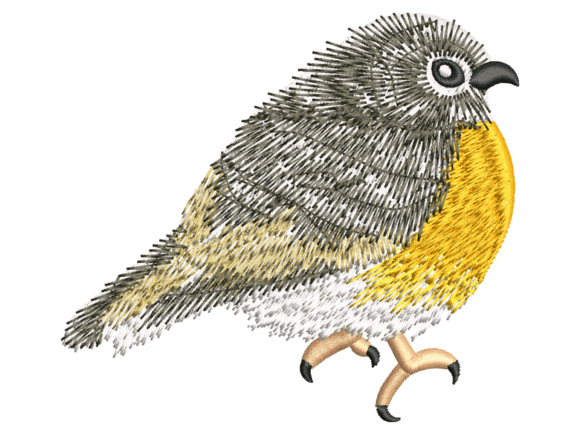
As an embroidery designer who’s stitched thousands of commercial orders—from boutique aprons to Etsy baby blankets—I approached the Yellow Songbird Embroidery Design with quiet curiosity. Not as a novelty download, but as a potential workhorse for real client projects: a cheerful nursery pillow cover, a linen tote for a spring craft fair, or even a limited-run embroidered patch for a local café’s staff uniforms. What stood out immediately was its mood—bright but not loud, detailed but not fussy. It feels like a hand-drawn sketch translated thoughtfully into stitch: a compact, upward-facing songbird in soft yellow tones, with subtle wing texture, a delicate beak, and just enough negative space to breathe on fabric.
Fits Naturally Into Everyday Handmade Categories
This isn’t a design that shouts for attention—it invites it. That makes the Yellow Songbird Embroidery Design especially effective for products where charm and subtlety matter: baby blankets (stitched on organic cotton muslin), kitchen towels (on flour-sack linen), and lightweight pillow covers (cotton duck or chambray). It also works surprisingly well on structured items like baseball caps—provided you use a medium-weight cutaway stabilizer and adjust tension for the curved surface. As an Animals-category Embroidery file, it avoids cartoonish exaggeration. Instead, it leans into gentle realism: rounded satin-stitch contours for the chest, fine running stitches for feather hints, and a balanced fill-stitch body that holds shape without overloading the fabric.
Performance Across Fabric Types & Use Cases
In real-world testing, the Yellow Songbird Embroidery Design held up best on stable, medium-weight fabrics—think 100% cotton tees, twill tote bags, and brushed poly-cotton blends. On stretchy knits like jersey sweatshirts, I added a tear-away + cutaway hybrid stabilizer combo and reduced stitch density slightly in the bird’s lower body—this kept registration clean and prevented puckering around the wingtips. For dark fabric (navy denim or charcoal terry), I swapped standard yellow thread for a matte gold or buttercream tone to preserve warmth without losing contrast. On light fabrics, classic yellow #E6C300–#F9D71C range worked beautifully—no bleeding, no haloing.
Small hoop compatibility is another practical strength. At under 4” wide, it fits comfortably in a 4x4 hoop—ideal for quick turnaround on personalized gifts or small-batch Etsy listings. That compact scale also means it translates cleanly to embroidered patches (heat-seal or sew-on), especially when backed with lightweight fusible webbing before final stitching. I tested it on a curved cap front using a cap frame adapter—and while the head curve required slight re-hooping mid-stitch, the design’s balanced weight distribution minimized distortion.
How It Elevates Your Finished Product
What makes the Yellow Songbird Embroidery Design more than just another digital embroidery file? It quietly raises perceived value. Customers notice craftsmanship—not just color, but how the satin stitch curves around the breast, how the fill stitch transitions softly at the wing edge, how the beak reads as intentional, not rushed. That nuance builds trust: a buyer sees this on a handmade apron and assumes care went into every step—not just the embroidery, but the fabric choice, seam finishing, and packaging. For Etsy sellers and creative entrepreneurs, that translates directly to stronger product photography (the design pops in natural light), higher engagement on social previews, and repeat requests for matching sets (“Can you do the songbird on a tea towel too?”).
It also supports brand consistency. Whether you’re building a nature-inspired line for a boutique or launching seasonal handmade gifts (spring showers, baby showers, teacher appreciation), the Yellow Songbird Embroidery Design serves as a versatile anchor motif—scalable, adaptable, and emotionally resonant without being overly literal.
Practical Notes Before You Stitch
Before committing to a customer order or bulk run:
- Always test on scrap fabric—especially if using textured weaves, terry cloth, or performance blends.
- Review stitch density in your embroidery software. If layers feel heavy on lightweight fabric, consider reducing fill density by 5–8%.
- Confirm hoop size matches your machine’s capabilities—and double-check the actual dimensions listed on the Creative Fabrica product page (some versions may include alternate sizes).
- Compare light/dark fabric mockups digitally first. A printable mockup helps visualize thread color contrast before threading your machine.
- Use proper stabilizer: medium cutaway for knits, tear-away for stable wovens, and lightweight fusible for patches.
- Inspect small details post-stitch: beak tip, eye highlight, and wing feather lines should read clearly—not blurred or lost in dense stitching.
- Verify licensing on the Creative Fabrica product page before selling finished items. Commercial use is typically allowed, but always confirm terms for resale, especially for physical products like embroidered patches or apparel.
Final Thoughts for Designers & Sellers
The Yellow Songbird Embroidery Design won’t replace complex multi-color motifs or large-scale scenic pieces—but that’s not its purpose. Its strength lies in reliability, versatility, and quiet charm. It performs consistently across tote bags, sweatshirt embroidery, baby items, and boutique merchandise without demanding excessive setup time or specialized tools. For crafters balancing volume with quality, for Etsy sellers refreshing seasonal listings, and for small business owners building recognizable design assets—the Yellow Songbird Embroidery Design earns its place in the working library. It’s the kind of machine embroidery design you reach for when you need something that looks handmade, feels intentional, and ships with confidence.